Bespoke Qipao & Cheongsam — Made to Measure in Los Angeles
At JINZA, every Qipao and Cheongsam is made entirely to your measurements — from silk selection to hand embroidery, each piece is designed to reflect who you are, built for weddings, tea ceremonies, receptions, and moments that deserve something one of a kind.
What Is a Qipao and Cheongsam?
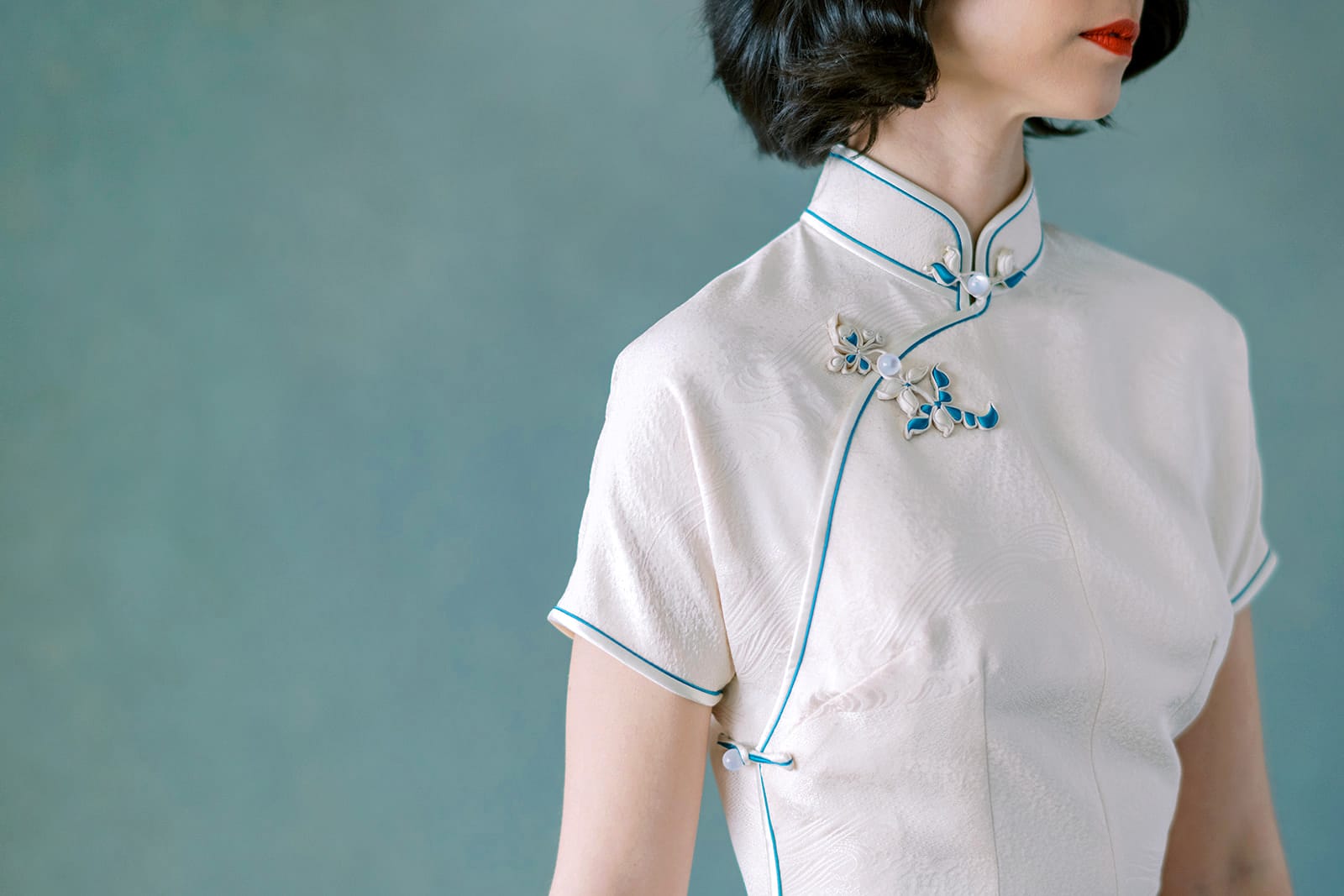
The Qipao — also known as the Cheongsam — is China's most iconic dress. Defined by its high collar, fitted silhouette, and side slits, it has represented femininity, confidence, and cultural pride for over a century.
Although the terms are often used interchangeably, Qipao (Mandarin) and Cheongsam (Cantonese) reflect different regional traditions. At JINZA, we work with both — traditional hand embroidered Qipao rooted in Shanghai's golden era, and modern Cheongsam reinterpreted with contemporary silhouettes and Western evening gown cuts.
Every piece is made entirely to your measurements in Los Angeles — not a standard size, not a pattern from a catalogue. Yours from the first stitch.
Traditional Qipao v.s. Modern Cheongsam
What Is a Traditional Qipao?
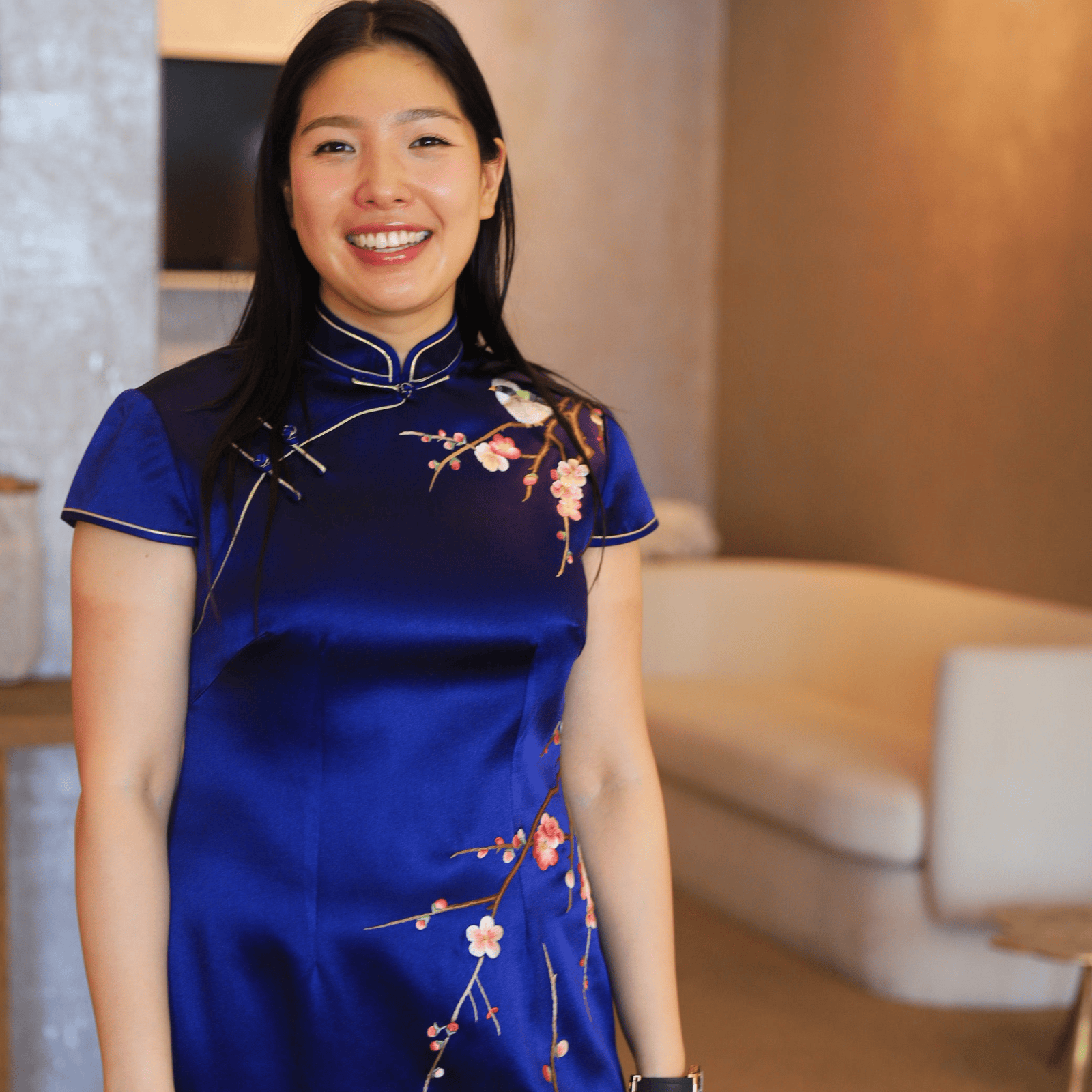
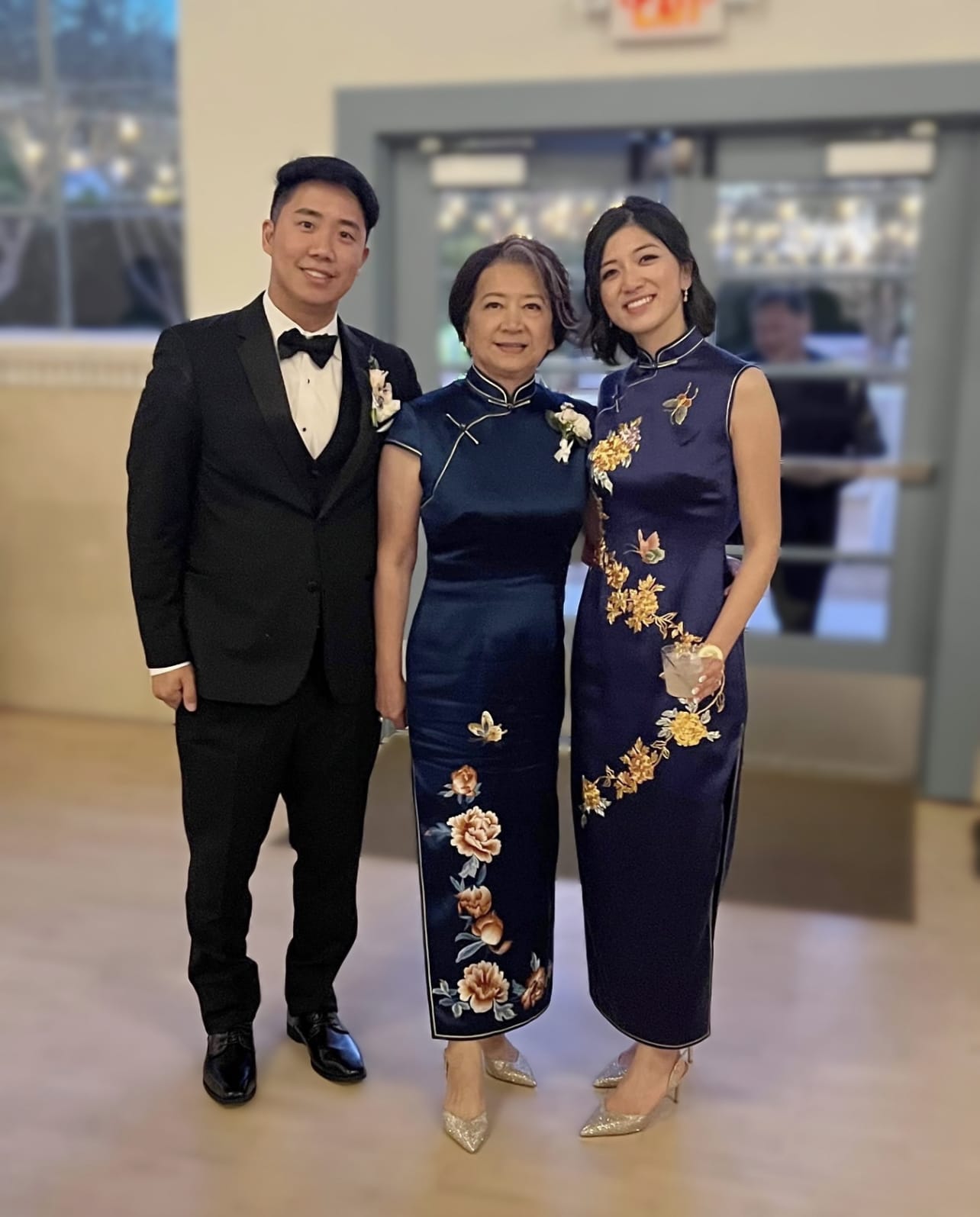
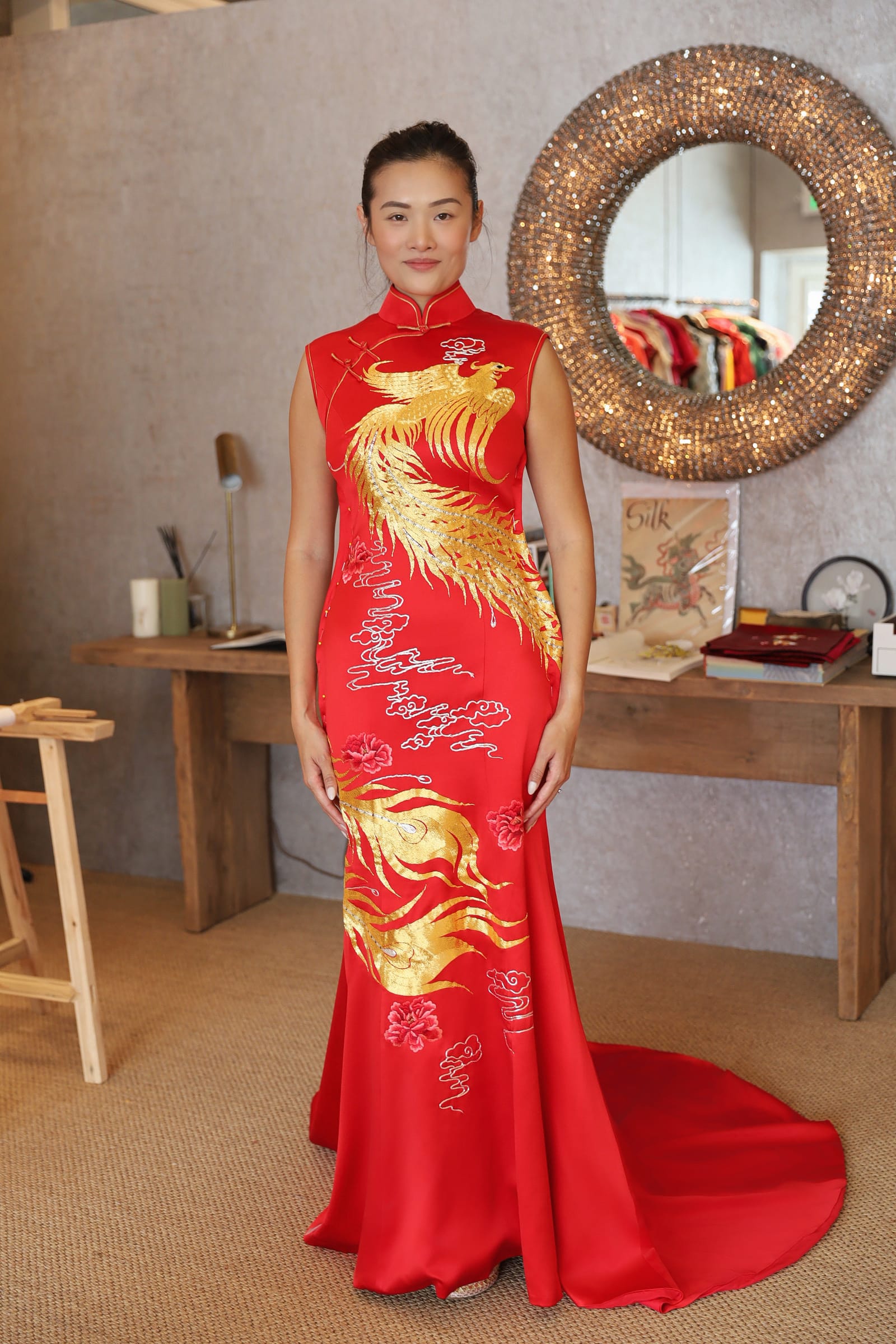
The traditional Qipao is defined by its structured silhouette, high mandarin collar, fitted waist, and side slits. Made in silk or brocade with hand embroidery, it draws directly from the elegance of 1920s Shanghai — a time when the Qipao became the defining symbol of Chinese femininity and style.
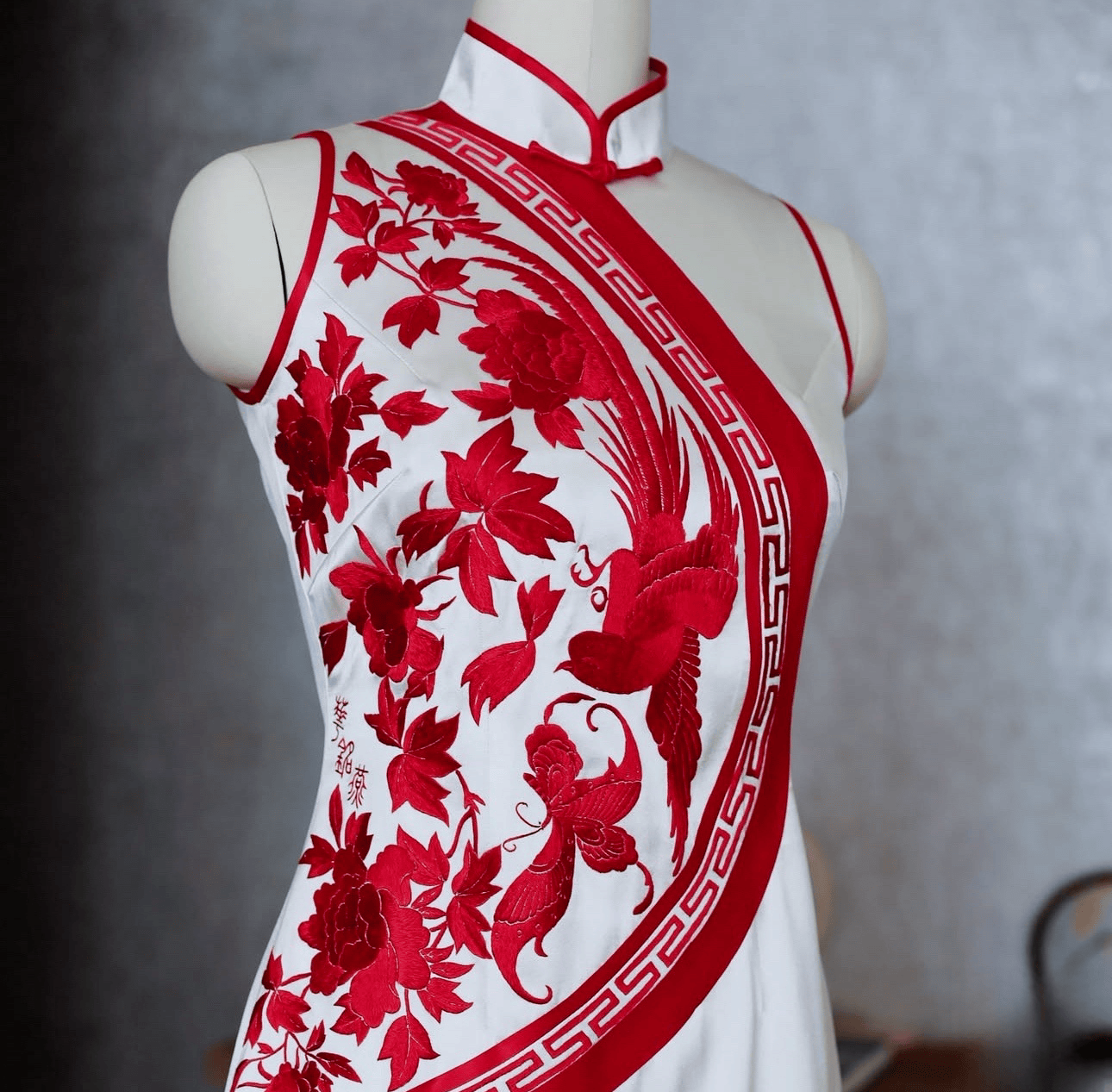
Traditional Qipao embroidery features motifs chosen for their meaning — peonies for prosperity and family honour, phoenixes for grace and new beginnings, butterflies for joy and transformation, lotus flowers for purity and resilience.
It is the choice for weddings, tea ceremonies, formal cultural celebrations, and women who want a piece that carries the full weight of Chinese heritage. At JINZA, every traditional Qipao is made entirely to your measurements with hand embroidery worked stitch by stitch.
What Is a Modern Cheongsam?
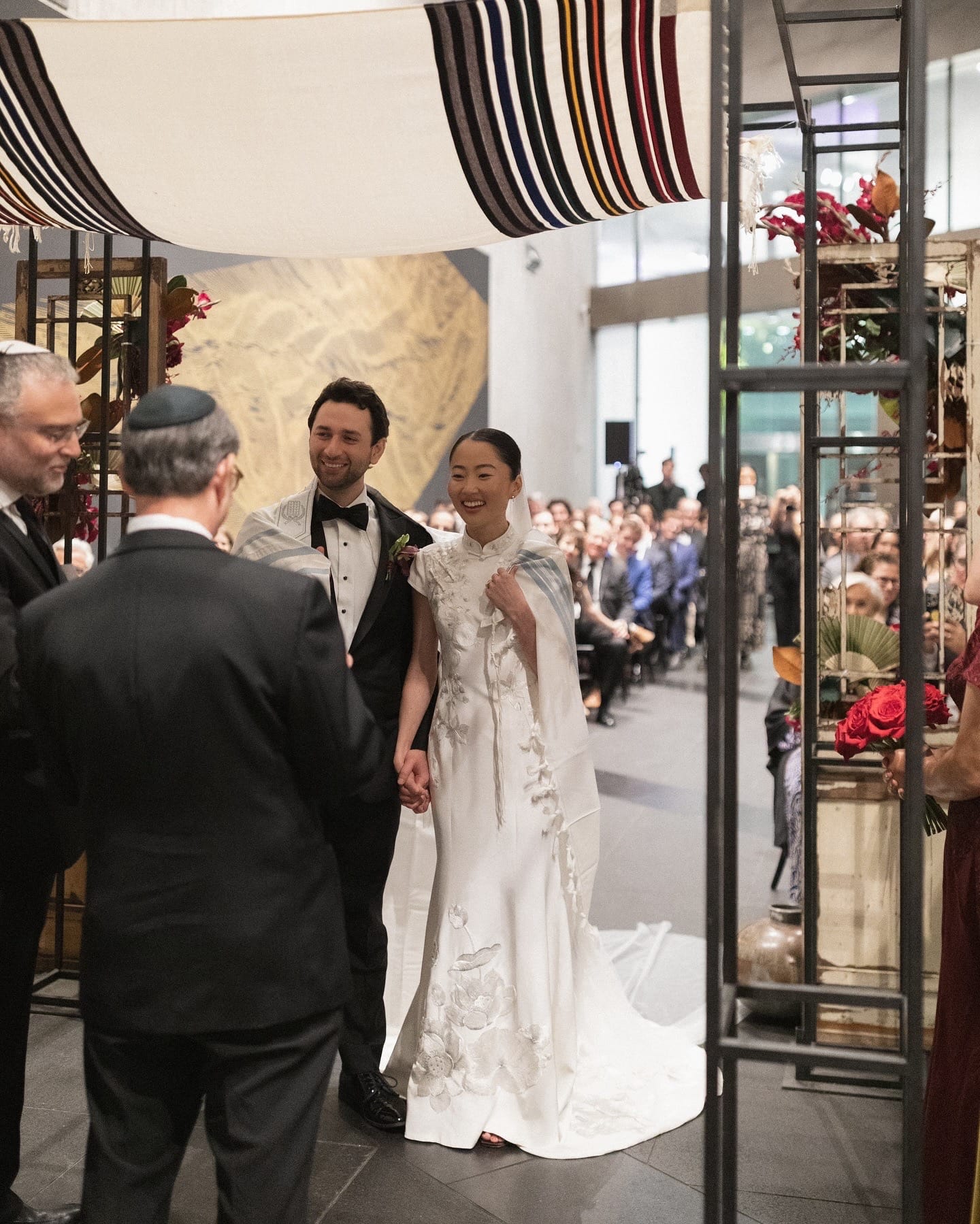
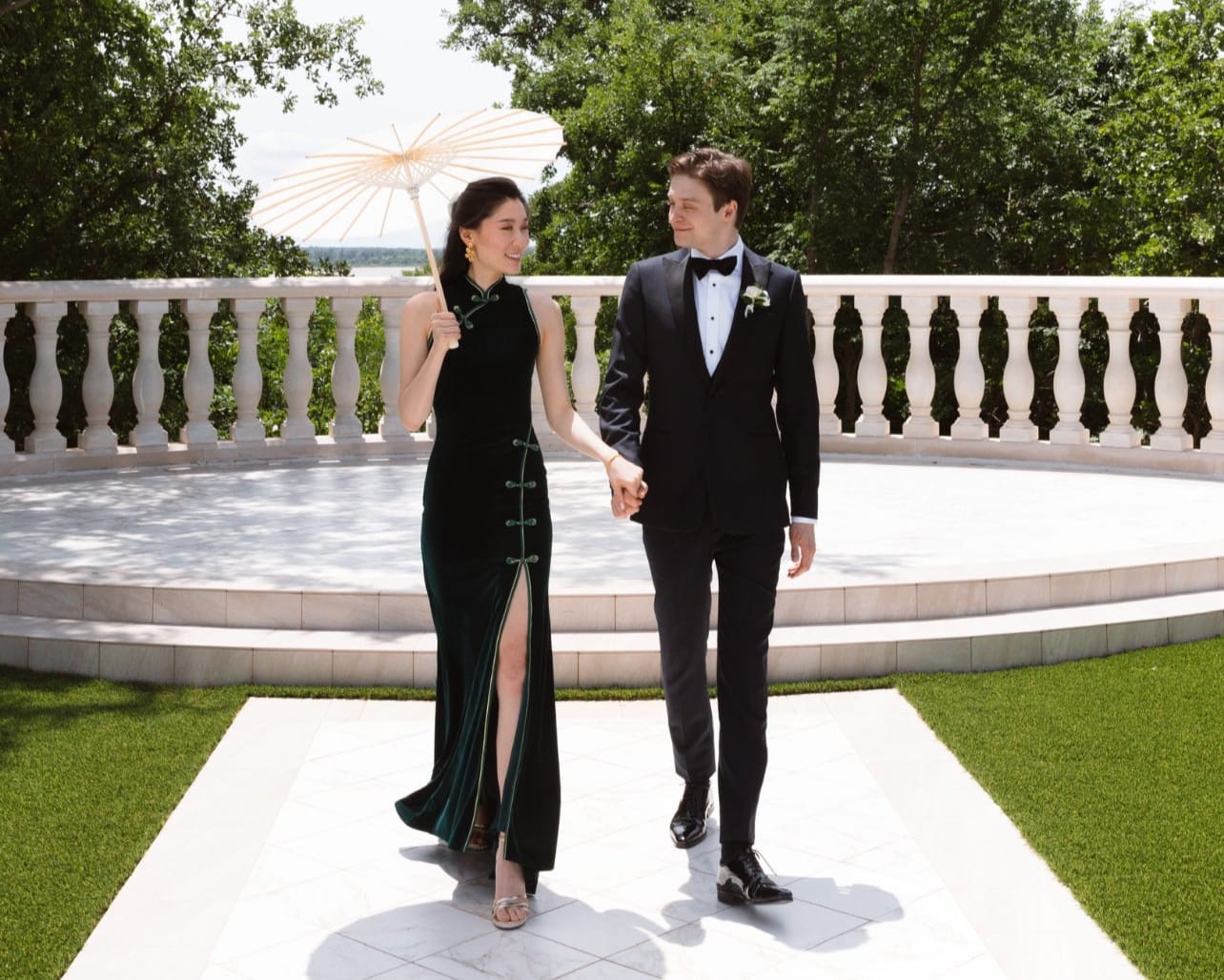
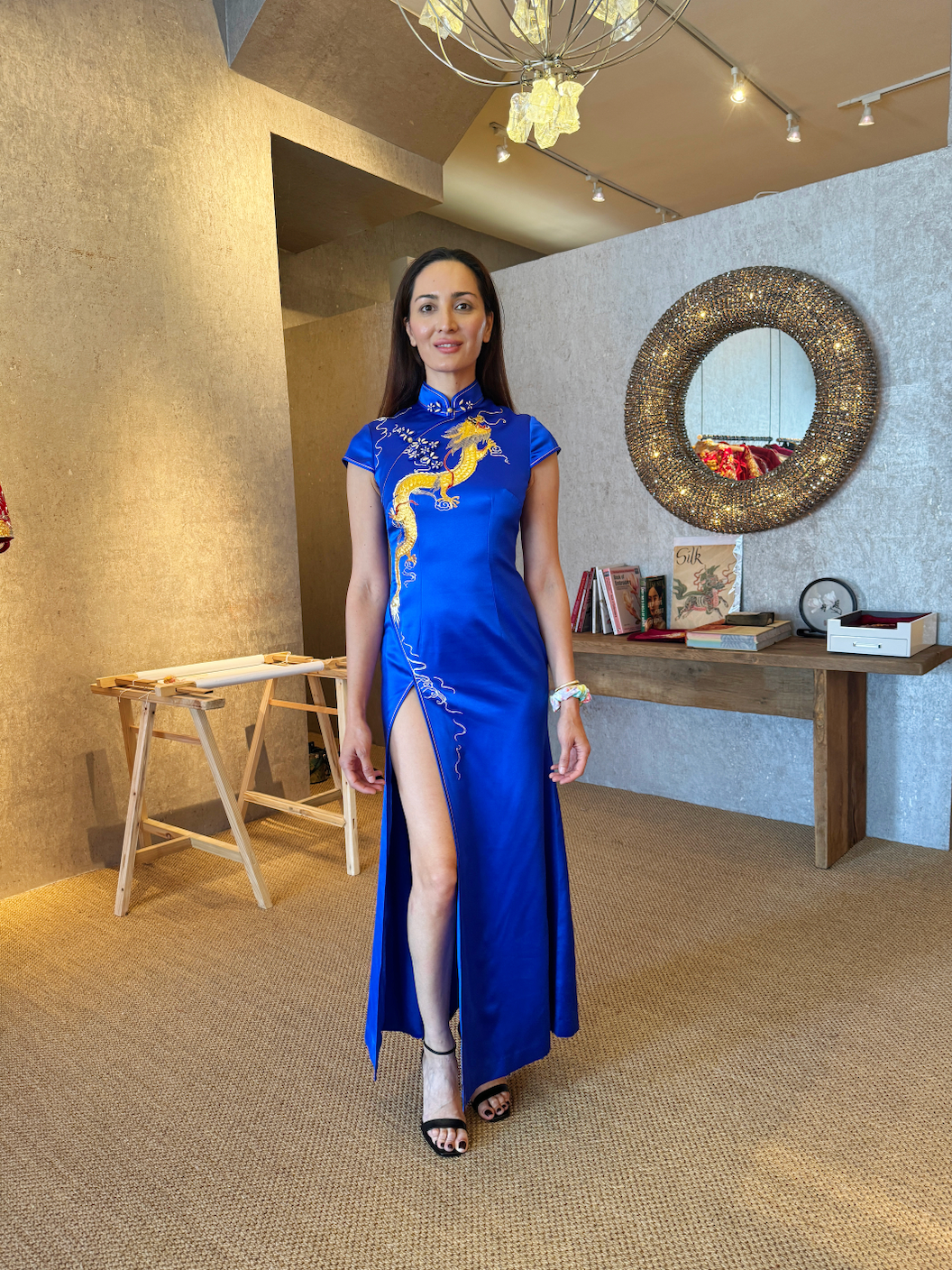
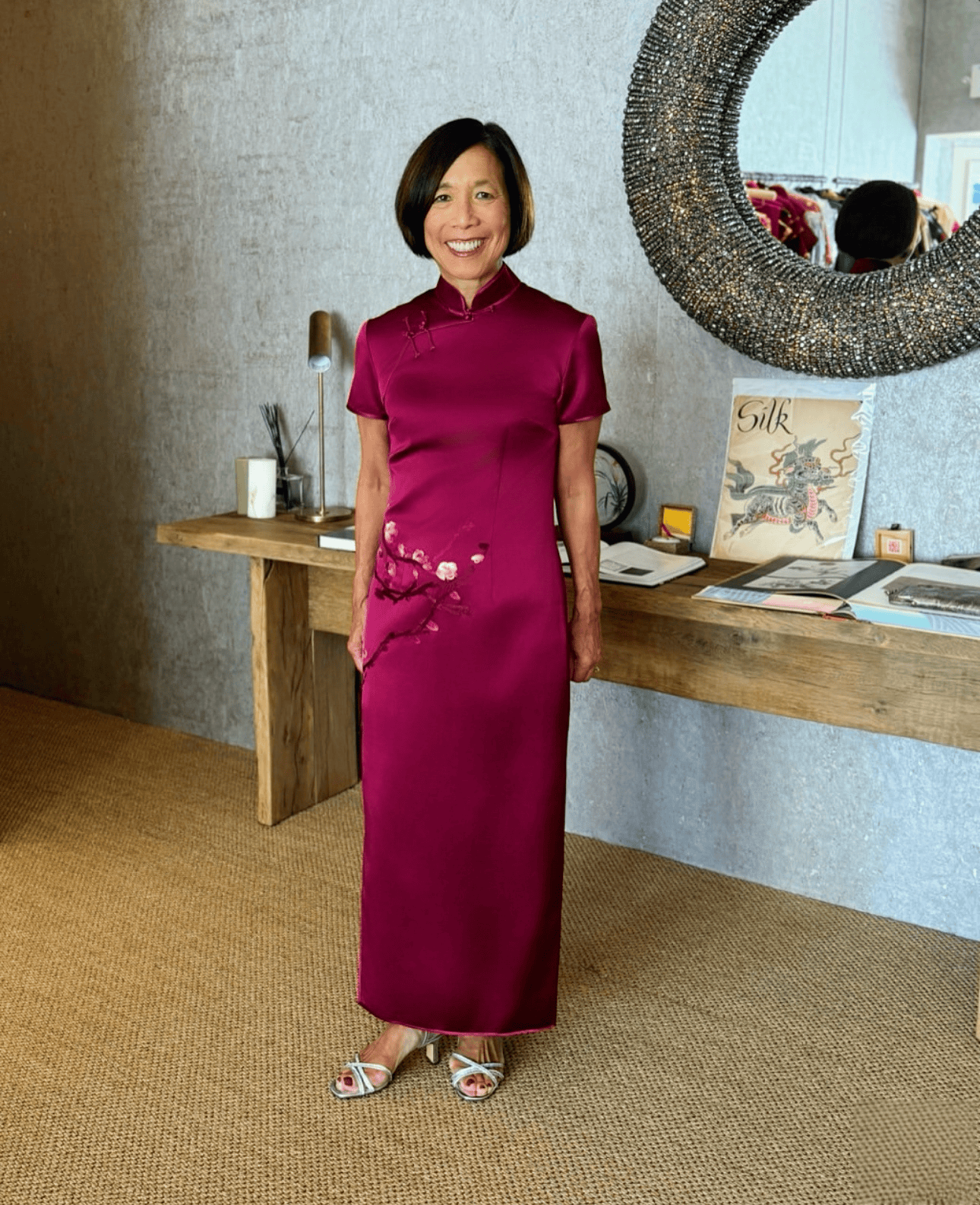
The modern Cheongsam reinterprets the classic Qipao silhouette with contemporary fabrics and Western evening gown cuts — bias cut, fitted and flare, A-line, and mermaid styles. The softer structure allows easy movement while keeping the cultural identity of the original garment fully intact.
Modern Cheongsam fabrics include Japanese silk, stretch silk, velvet, and lace — each chosen for how it moves, feels, and photographs. The result is a dress that works equally well for a Chinese tea ceremony, a Western reception, or a red carpet event.
It is the choice for brides and women who want cultural elegance without sacrificing comfort or contemporary style. At JINZA, every modern Cheongsam is made entirely to your measurements with fabric and details chosen together during your private consultation.
Which Style Is Right for You?
Choosing between a traditional Qipao and a modern Cheongsam comes down to your occasion, your personal style, and how you want to feel on the day.
Choose a traditional Qipao if you are wearing it for a Chinese tea ceremony, a formal cultural celebration, or if you want a piece that carries the full weight of heritage and can be passed down. The structured silhouette, high collar, and hand embroidery make a statement that nothing else can replicate.
Choose a modern Cheongsam if you want something that moves with you through a long wedding day or evening event. Its softer structure, contemporary cut, and versatile silhouette make it equally comfortable at a Chinese banquet, a Western reception, or a red carpet event.
Not sure which is right for you? Bring your ideas to your consultation and we will guide you through the options together — considering your occasion, your body, and what feels most like you.
How Your Bespoke Qipao Is Made
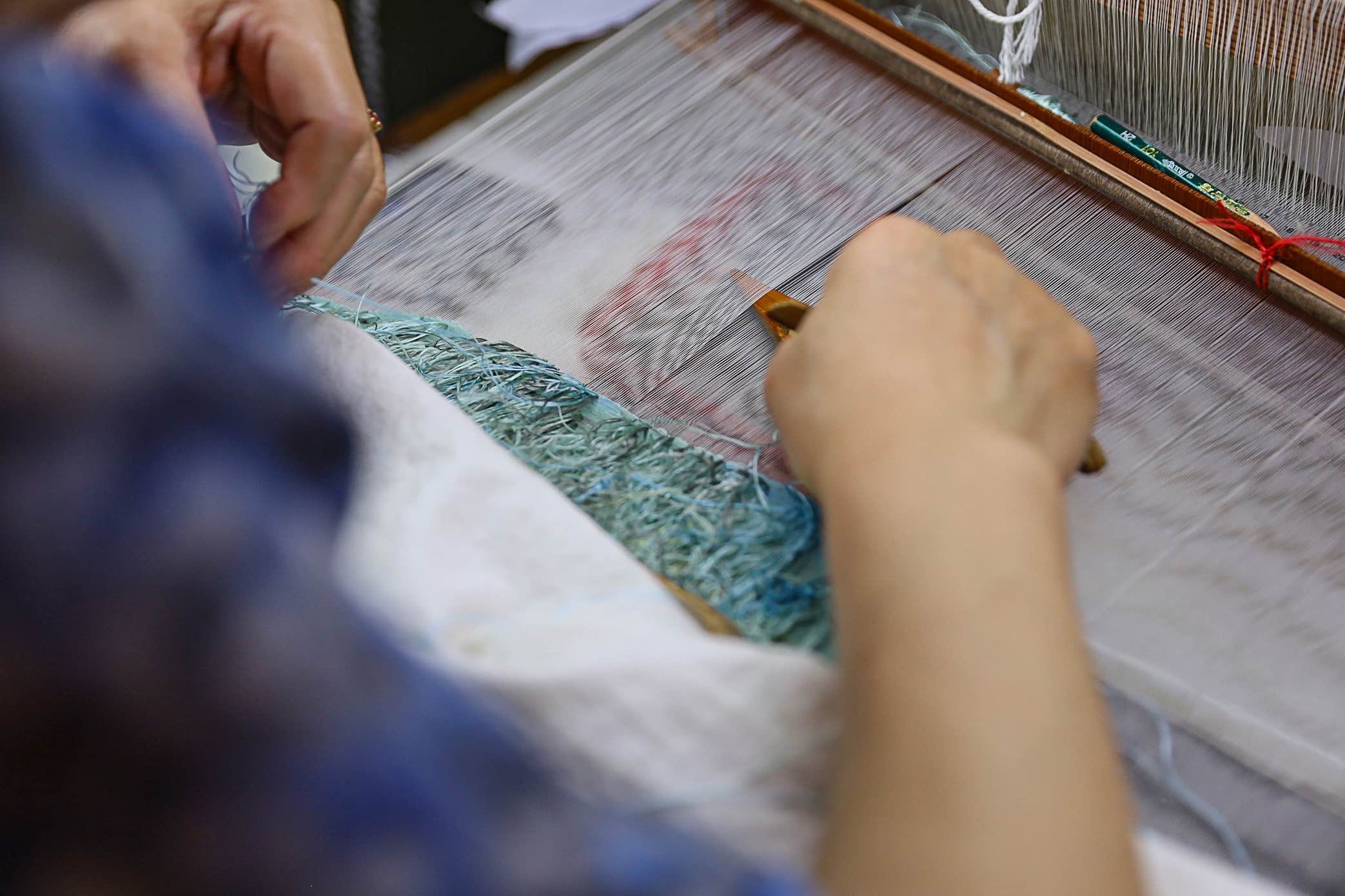
Every Qipao and Cheongsam at JINZA begins with your measurements and ends with a garment made entirely for you. The process starts with a private consultation — in person at our Los Angeles atelier or via Zoom — where fabric, embroidery motifs, and every detail are chosen together.
An individual pattern is then drafted to your exact measurements. A muslin toile is fitted on you before any precious fabric is cut. Hand embroidery is worked stitch by stitch using Shu and Panjin techniques. A final fitting ensures everything is exactly right before delivery.
A simple Qipao takes approximately 6 weeks. An embroidered piece takes 3 months or more depending on complexity.
Fabric — From Silk to Linen, Brocade and Beyond
At JINZA, your Qipao or Cheongsam can be made in almost any fabric — traditional or contemporary, Eastern or Western.
Silk remains the classic choice — breathable, luminous, and perfect for weddings and formal occasions. Silk brocade and jacquard weave pattern directly into the fabric for added texture and depth without heavy embroidery.
For modern Cheongsam, the options expand significantly. Japanese cotton and linen offer a relaxed elegance perfect for daywear and casual occasions. Italian linen brings structure and breathability for warmer seasons. Stretch silk and lace give a softer, more contemporary silhouette. Even Western bridal fabrics — organza, crepe, and silk satin — work beautifully in a Cheongsam cut.
Hand embroidery is available on any fabric — from traditional Shu and Panjin techniques on silk to delicate motifs on cotton or linen. Every motif is chosen for its personal meaning during your consultation.
If you have a fabric in mind — or a swatch from another garment you love — bring it to your consultation and we will tell you exactly what is possible.
Explore the Collection
Browse our Qipao and Cheongsam collection — traditional hand embroidered silk Qipao and modern Cheongsam in a range of fabrics, silhouettes, and styles. Each design is a starting point for something entirely yours.
For everyday elegance and shorter timelines, our ready-to-wear Cheongsam collection offers premium designs available immediately or with minor alterations.
Made for Moments Like These
Frequently Asked Questions
The traditional Qipao is structured and formal — made in silk or brocade with hand embroidery, high collar, and a fitted silhouette rooted in 1920s Shanghai style. It is the choice for tea ceremonies, formal cultural celebrations, and brides who want a piece that carries the full weight of Chinese heritage. The modern Cheongsam reinterprets the same silhouette with contemporary fabrics and Western evening gown cuts — bias cut, fitted and flare, A-line, and mermaid styles. It offers a softer structure and is comfortable for weddings, receptions, and evening events.
A simple Qipao takes approximately 6 weeks. An embroidered Qipao takes 3 months or more depending on the complexity of the embroidery. We recommend booking your consultation as early as possible to allow time for fittings and adjustments.
Yes. Every piece at JINZA is built with structure and seams that allow for easy alteration and future re-wear. Many of our clients wear their Qipao for Lunar New Year celebrations, anniversaries, formal events, and family occasions for years after their wedding.
Absolutely. During your consultation we guide you through traditional motif meanings and help you choose symbols that reflect your personal story. Peonies represent prosperity and family honour. Phoenixes represent grace and new beginnings. Lotus flowers represent purity and resilience. We have also embroidered family names, pets, and cultural symbols from non-Chinese traditions for multicultural weddings.
Yes. Most of our clients are outside Los Angeles. We offer Zoom consultations, ship fabric swatches, and provide muslin fittings by mail. Your Qipao or Cheongsam will be tailored to your measurements and shipped securely anywhere in the United States or internationally.
Silk is the traditional and most popular choice — breathable, fluid, and luminous, it catches light beautifully and photographs exceptionally well. Silk brocade and jacquard weave pattern directly into the fabric for added texture and depth. For modern Cheongsam, Japanese silk, stretch silk, velvet, and lace are also popular choices depending on the occasion and season. During your consultation we guide you through all fabric options so you can feel the difference before you decide.
Ready-to-wear Qipao and Cheongsam start from $500. Wedding Qipao starts from $1,500. Bespoke pieces made entirely to your measurements start from $1,200. For full pricing and timeline details visit our Pricing and Timeline page.
Yes — and this is something only a bespoke atelier can do. When both garments are commissioned together at JINZA, we design them as a coordinated pair from the first consultation — same silk, same embroidery story, same colour carried through both pieces. The phoenix on your Qipao, the dragon on his Tang suit. This is what bespoke means at JINZA.
Absolutely. At JINZA we have made Qipao and Cheongsam for women from many different cultural backgrounds. Before specialising in Chinese dress, we built our foundation making Western wedding gowns — so we understand both Eastern and Western construction and how to flatter different body shapes. We adapt every Qipao to fit you perfectly. For multicultural weddings we also blend embroidery motifs from both cultures to honour both families equally.